
Rats Are Moving Into Southern Utah Homes. Here's What Every Homeowner Needs to Know.
St. George is growing fast. With that growth comes a problem that many homeowners — especially those with a second home or vacation property — don't see coming until the damage is already done.
Roof rats are here. And according to local pest control professionals, they're not going anywhere.
Reports of infestations have spread from Little Valley and Bloomington Hills to downtown neighborhoods and newer developments on the city's edges. Exterminators say they're busier than ever, and residents are increasingly sharing stories in neighborhood groups. One St. George neighborhood saw hundreds of roof rats take hold before residents knew what was happening.
The question isn't whether your neighborhood is at risk. It's whether you'll catch the problem early enough to matter.
What makes Southern Utah a target right now
Roof rats — also called black rats or house rats — aren't native to Southern Utah. They came in with growth. The more people who move into an area, the more food, water, and shelter there is to support a rodent population. Once established, they don't leave on their own.
Chris Hill, sales manager and lead pest professional with Western Pest Control, has watched the shift happen over roughly five years. "The roof rat specifically, over probably the last five years or so, we're seeing just a marked increase" Hill told St. George News. "More often than not, if I'm going out on a rodent call, it's a roof rat, and that's concerning, because they are bigger, they are more aggressive and they do more damage".
Several conditions in Southern Utah make this worse than in other growing cities.
Dry winters push rats inside. When conditions get dry, roof rats move closer to homes in search of water. Dry winters drive spikes in infestation calls because rats become more aggressive about finding water sources inside homes. Golf courses and fruit trees are rat magnets — the golf course communities popular with second-home owners and snowbirds see consistent roof rat activity, and palm trees give rats both food and direct travel routes to your roofline. As development spreads through Desert Color, Entrada, and SunRiver, displaced rodent populations push into established neighborhoods. Southern Utah's signature rock landscaping looks clean but sits right against foundations and gives rats a place to hide.
Infestations also spread between homes faster than most people expect. Shared walls, attics, and crawl spaces in attached housing and condominiums mean rats rarely stay confined to one unit. "If you have them, your neighbors have them, and vice versa" Hill noted.
The Warning Signs Most Homeowners Miss
Roof rats are nocturnal. You're unlikely to see one in the middle of the day. What you'll notice — if you're home — are sounds: scratching or scampering overhead at night is often the first sign.
Most infestations are found through physical evidence, not sightings. Along walls, in cabinet corners, under sinks, and in attic spaces, look for droppings — spindle-shaped, about half an inch long. Gnaw marks on food packaging, wood, plastic, or wiring are another clear indicator. Greasy rub marks along baseboards and walls show where rats travel the same paths repeatedly. Hollowed-out fruit on yard trees is a classic sign of roof rat activity. In attic spaces, disturbed or shredded insulation points to nesting.
Pets sometimes pick up on infestations before people do. A dog or cat fixating on a wall or ceiling is worth paying attention to.
The damage goes well beyond droppings and chewed packaging. Roof rats gnaw constantly — their incisors never stop growing, so they wear them down on whatever's available. That means wood studs, drywall, PVC pipes, and electrical wiring. Chewed wiring is a direct fire hazard. Gnawed pipes cause water damage. Rats also carry hantavirus, leptospirosis, and other pathogens that affect both humans and pets.
One more thing worth knowing: damage caused by rodents is generally not covered under standard homeowners insurance policies.
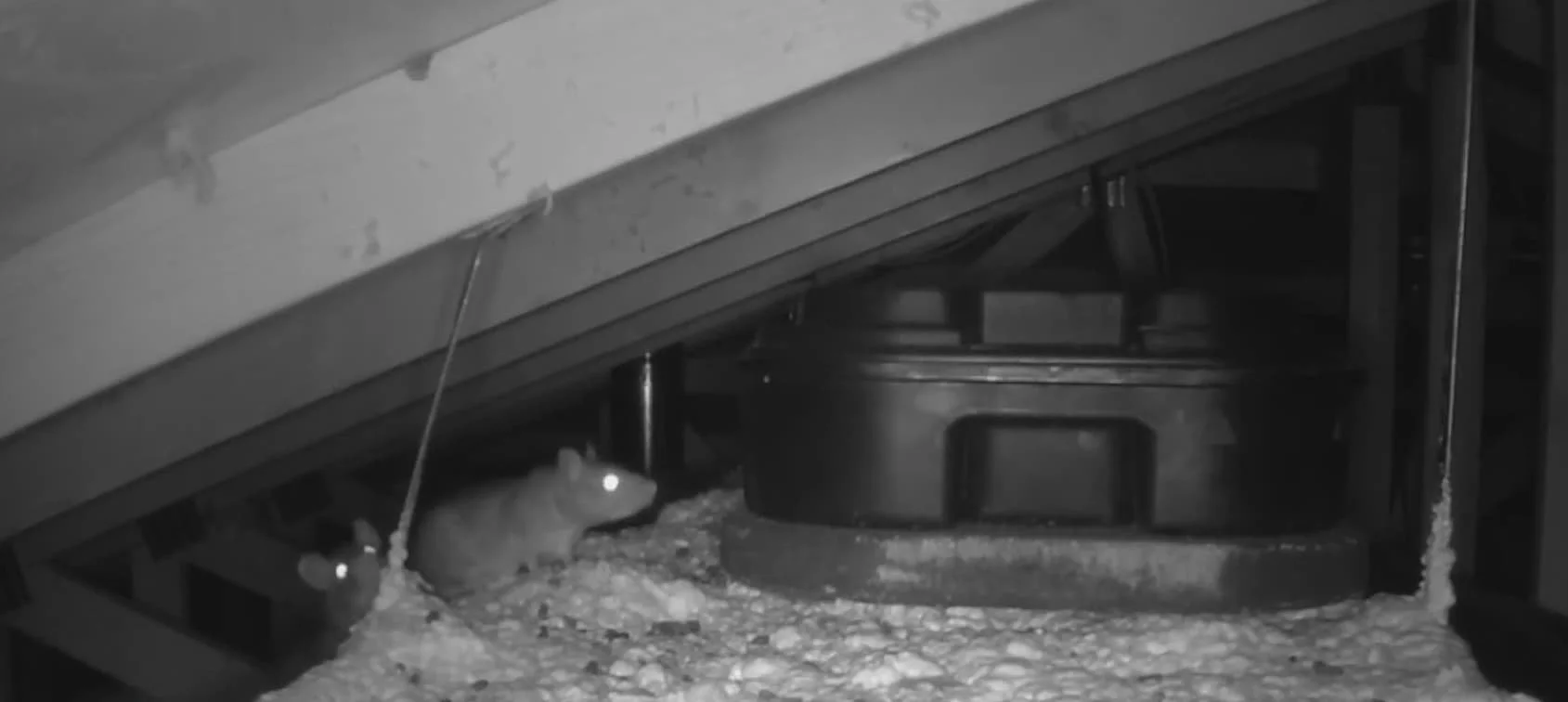
Why Second Homes and Vacation Properties Face a Different Kind of Risk
Roof rats don't need you to be home. In fact, they prefer it when you're not.
An unoccupied property gives them exactly what they're looking for: undisturbed shelter, no human activity, no disruption to their routines. A vacation home or second home that sits empty for weeks or months is an ideal environment for a rat population to take hold and grow.
By the time a Southern Utah snowbird returns or a second-home owner arrives for a long weekend, a manageable situation can look very different. Chris Hill put it plainly: "I've seen people who have second homes, and there's a layer of droppings in every room, you know, half an inch thick, and it's just a disaster."
Snowbirds and second-home owners may spend months away — sometimes fall through late winter, or May through September. That's a long time for a roof rat family to get comfortable and multiply.
The longer an infestation goes undetected, the more expensive it becomes to fix. Chewed wiring, water damage from gnawed pipes, contaminated insulation, structural damage to attic framing — these aren't minor repairs, and they compound. By the time the smell or the evidence becomes unavoidable, you're often past the point where a few traps and a pest treatment will cut it.
What You Can do to Protect Your Home
Prevention is cheaper than remediation by a significant margin. Here's what pest control professionals consistently recommend for Southern Utah properties.
Seal your entry points first. Roof rats can squeeze through a gap the size of a nickel, and they enter through rooflines, eaves, utility penetrations, and gaps in your foundation. Steel wool, metal flashing, hardware cloth, and expanding foam are the right materials — wood and soft caulk won't hold. Pay close attention where utility lines, pipes, and cables enter the structure.
Cut off food and water outside. Bird feeders, fruit trees, and unsecured trash are feeding stations. Keep trees trimmed so branches don't run within six feet of your roofline — palm trees in particular are known rat highways to upper floors and attic spaces.
Look at your landscaping. Rock landscaping against your foundation is ideal rat habitat. A clearance zone between landscaping and your home's exterior walls makes a real difference.
Work with a local pest professional. Southern Utah's desert environment, specific neighborhood types, and landscaping patterns require someone who knows the area. Local exterminators understand where roof rats establish themselves in local communities like Bloomington Hills, Entrada, and The Ledges in ways that a franchise operation often doesn't.
Where Home Watch Comes in
Prevention and pest control matter. But for second-home owners and snowbirds with a vacation home in St. George, there's a gap no pest treatment fully covers: the weeks and months when no one is looking.
A home watch service fills that gap.
At KeyBird Home Watch & Concierge, weekly and biweekly property inspections include a thorough walk of your interior and exterior — including attic access areas, garage spaces and utility rooms where rodent activity often first shows up. Every inspection is GPS-verified and timestamped, with a digital report sent directly to you so you know exactly what was found.

Early detection is everything with roof rats.
Finding a few droppings or flagging a disturbed area during a routine inspection is a very different situation than discovering an entrenched infestation after months away. When something looks off, we coordinate with your pest professional or preferred vendor and keep you in the loop.
KeyBird is the only NHWA-accredited home watch provider in Southern Utah, which means inspections meet the standards set by the National Home Watch Association. We carry $1 million in general liability coverage, a $10,000 dishonesty bond, and $100,000 in cyber liability insurance. Every inspection is documented and reported.
For Southern Utah snowbirds and anyone managing Southern Utah real estate from a distance, the real risk isn't whether rats exist in your neighborhood. It's finding out about a problem on your schedule — before it's become an expensive one.
Your Next Step
If you own a second home or vacation property in St. George, Washington, Ivins, Desert Color, Entrada, SunRiver, or the surrounding communities, we'd be glad to walk through your property with you. Every KeyBird engagement starts with an on-site consultation and walk-through at no charge.